
No Time to Relax
Advertisement
Games Overview
No Time to Relax APK is a fast-paced life simulation game that challenges players to balance career, money, health, and happiness in a competitive board-game style experience.
Table of Contents
No Time to Relax APK: The Life Simulator That Exposes Hustle Culture Without Mercy
If you’ve ever joked about being “busy but broke,” No Time to Relax is about to laugh back at you—hard. This game looks cute, colorful, and low-stakes on the surface, but don’t be fooled. Underneath the playful art style is one of the most brutally honest life simulation experiences you’ll ever touch. It’s a game that takes modern adulthood, compresses it into a fast-paced board-game format, and then dares you to survive without losing your mind, your money, or your friendships.
This isn’t your cozy life sim where everything magically works out if you water plants and talk to NPCs. No Time to Relax is about pressure, priorities, and the constant feeling that there’s never enough time. Which, honestly, feels a little too real.
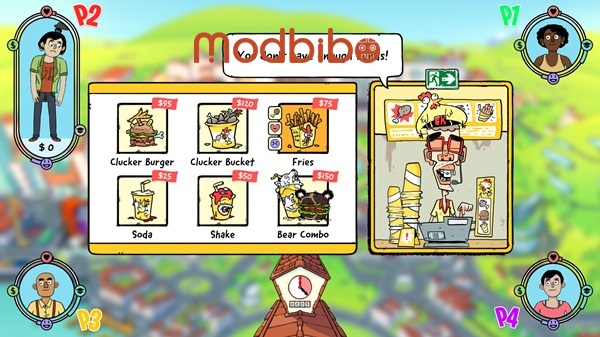
A Concept That Hits Uncomfortably Close to Home
At its core, No Time to Relax is a life simulation mixed with a competitive board game. You and other players step into the roles of young adults trying to “make it” in a world that demands productivity 24/7. Your goals? Earn money, build a career, maintain your health, invest wisely, and somehow still enjoy life before the game ends.
Sounds simple. It’s not.
Every turn represents a slice of your character’s life, and each decision comes with trade-offs. Want more money? Grind harder at work and sacrifice free time. Want better health? Spend time resting or exercising, but say goodbye to extra income. Want happiness? Cool, but that won’t pay rent.
The game doesn’t sugarcoat anything. It actively forces you to confront the reality that you can’t optimize everything at once. Something always gives.
Gameplay That Feels Like Speedrunning Adulthood
The gameplay loop is deceptively straightforward. You move around a board, land on different tiles, and choose actions that affect your stats: money, health, happiness, and career progress. But what makes No Time to Relax stand out is how quickly things escalate.
Advertisement
Turns fly by. Opportunities appear and disappear. Random events throw your carefully planned strategy into chaos. One bad decision early on can haunt you for the rest of the game.
Unlike traditional board games where luck dominates, this one rewards long-term thinking. Investing early can pay off massively later, but only if you survive long enough to see returns. Overworking might boost your bank account, but it can tank your health, leading to penalties that slow you down even more.
The pacing is relentless, and that’s intentional. The game wants you to feel overwhelmed. It mirrors the pressure of modern life where everyone’s hustling, optimizing, and constantly comparing progress.
A Career System That Actually Matters
One of the most satisfying systems in No Time to Relax is the career progression. Jobs aren’t just cosmetic titles; they directly affect how you play. Higher-level careers bring in more income but often demand more time or come with harsher consequences if you neglect other aspects of life.
Career paths feel distinct, and choosing one early can shape your entire strategy. Do you chase high-paying jobs and risk burnout? Or do you play it safe with balanced work and steady growth?
What’s smart here is that success isn’t defined solely by money. You can “win” in different ways depending on how the game is set up. Sometimes it’s about wealth, sometimes happiness, sometimes overall balance. This flexibility encourages experimentation and replayability.
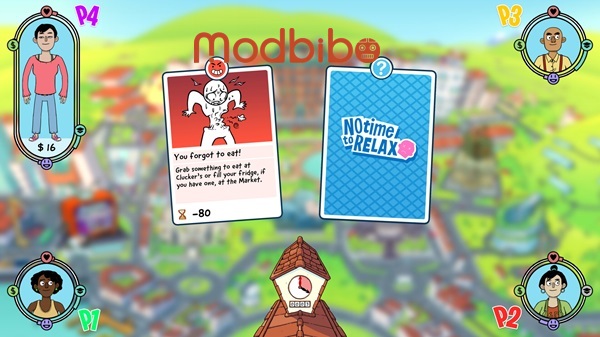
Money: Your Best Friend and Worst Enemy
Let’s talk about money, because No Time to Relax definitely does.
Money opens doors. It lets you invest, recover from mistakes, and gain advantages over other players. But it’s also incredibly easy to mismanage. Spend too much too early, and you’ll struggle to keep up. Hoard it without investing, and you’ll fall behind players who took smarter risks.
The investment system adds a layer of strategy that feels surprisingly deep. Timing matters. Market changes matter. And yes, sometimes luck matters—but not as much as understanding the bigger picture.
The game quietly teaches financial literacy without ever turning into a lecture. You learn by failing, adapting, and occasionally rage-laughing when a risky investment actually pays off.
Health and Happiness Are Not Optional
Many games treat health and happiness as secondary stats. No Time to Relax absolutely does not.
Ignore your health, and the game will punish you. Reduced movement, forced downtime, and lost opportunities can completely derail your momentum. Happiness works the same way. A miserable character is less efficient, less flexible, and more vulnerable to negative events.
What’s interesting is how these systems interact. Grinding nonstop might look optimal on paper, but the long-term consequences are brutal. The game constantly asks you to slow down—but then reminds you that slowing down has its own costs.
It’s a balancing act that feels frustrating in the best possible way.
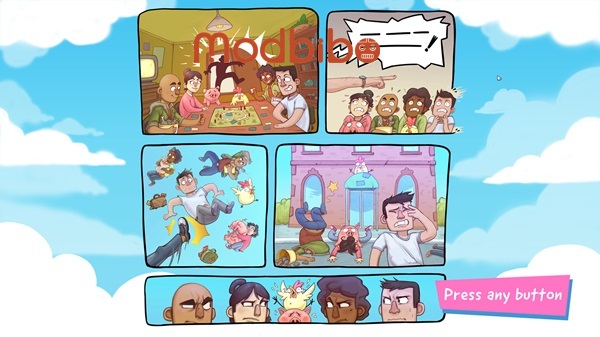
Multiplayer: Chaos, Competition, and Social Commentary
While the single-player experience is solid, No Time to Relax truly shines in multiplayer. Competing against friends transforms the game into a social experiment.
You’ll see different personalities emerge immediately. There’s always the grinder who only cares about money. The risk-taker who invests aggressively. The balanced player trying to keep everything stable. And sometimes, the chaos agent who just wants to watch everyone else struggle.
Advertisement
Multiplayer adds tension because you’re not just racing against the system—you’re racing against people. Watching someone else succeed after making a risky move you were too scared to try hits harder than any random event.
It’s funny, stressful, and weirdly revealing. You learn a lot about how people think when resources are limited.
Visual Style That Hides a Serious Message
Visually, No Time to Relax keeps things light. Bright colors, simple character designs, and clean UI make the game approachable. This contrast between cute visuals and harsh mechanics is intentional, and it works.
The art style makes the game accessible, while the underlying systems deliver the message. It never feels preachy, but it definitely feels pointed. The world looks friendly, but it doesn’t care about your feelings.
Animations are smooth, the interface is readable, and important information is always visible. For a game that throws so many decisions at you, clarity is crucial—and this game nails it.
Sound Design That Keeps You Moving
The soundtrack does exactly what it needs to do. It’s upbeat, energetic, and slightly stressful without being annoying. Music pushes you forward, reinforcing the idea that time is always running out.
Sound effects are subtle but effective, giving feedback for actions without overwhelming the experience. Nothing here is flashy, but everything feels intentional.
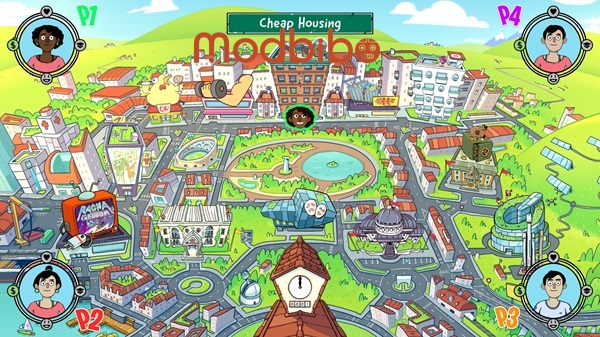
Replayability and Long-Term Appeal
One of the biggest strengths of No Time to Relax is its replay value. No two games feel the same. Different players, strategies, random events, and end goals keep things fresh.
You’ll likely lose your first few games. That’s normal. The learning curve is part of the fun. Each loss teaches you something new about timing, balance, or risk management.
Over time, you start seeing patterns. You plan further ahead. You adapt faster. And even then, the game finds ways to surprise you.
More Than a Game, Less Than a Comfort Zone
What makes No Time to Relax special is that it doesn’t try to make you comfortable. It doesn’t promise escapism or fantasy. Instead, it holds up a mirror and says, “This is what it feels like.”
It’s satire, strategy, and social commentary wrapped into one fast-paced experience. It’s funny, stressful, and sometimes a little too accurate. And that’s exactly why it works.
Conclusion
No Time to Relax is not just another life simulation game—it’s a sharp, self-aware experience that understands the chaos of modern life and turns it into engaging gameplay. Behind its colorful visuals and fast-paced turns lies a surprisingly deep system that forces players to confront hard choices, constant trade-offs, and the uncomfortable truth that you can’t have everything at once.